

When Tony Petkovic first visited Cartwright in March 2024, “there wasn't a lot of greenery. All the leaves were gone. The water was all frozen over. It seemed a lot more frigid and not as many people were around.” When he returned in September 2025, things couldn’t have been more different.
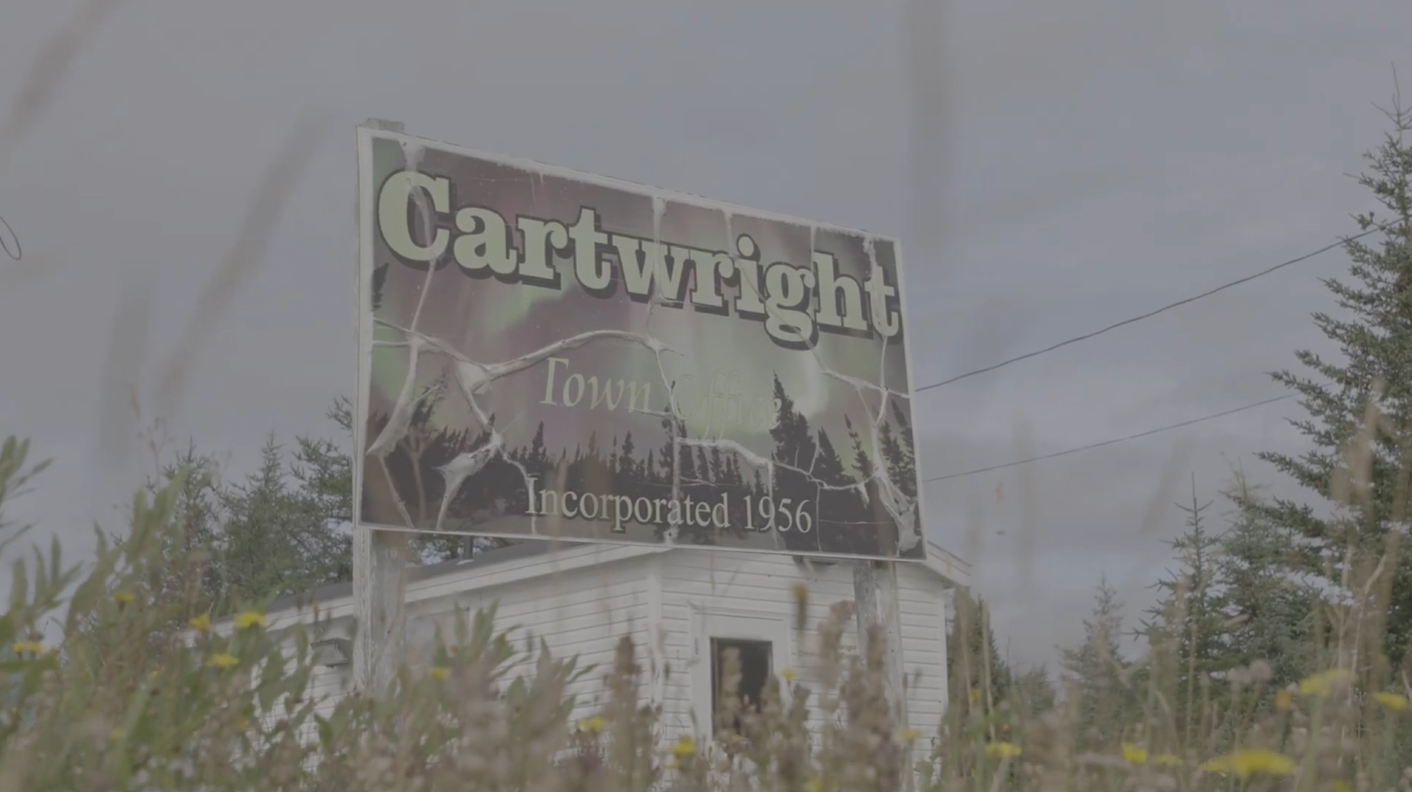
“When we were coming in from the Trans-Labrador Highway and driving into the community every single person we drove by turned around,” he says. “They looked at us, they said hello or waved… I honestly felt like a welcome member of the community, and we were there for a couple of weeks.”
“Here you could tell that these people were there to be part of something,” Eric Emon says, “to be part of the experience and to get something from it that doesn’t have a monetary value. They took away a lot more than that and that's what they wanted. It just felt really different and good.”
Tony is a Solar Engineer, and Eric is a Project Engineer. They work for solar energy company Green Sun Rising and joined Iron & Earth in Cartwright, NL, to supervise the installation of a 10 kW solar PV system on the Marion Centre. With a combined decade of experience in solar installation, Tony and Eric have built renewable infrastructure in communities from coast to coast to coast. But, they say, this project in Cartwright was special.
Cartwright is a remote community that has relied heavily on diesel, “which we know is very polluting, it's not the most efficient source of energy either,” Tony says. “So, a community like Cartwright would benefit greatly from clean energy generation. The training aspect can bring a sense of community engagement and ownership from the trainees… Having this experience with a small solar system can work toward the future of being prepared to implement more solar in the community.”
“I think it also cultivates a sense of environmental stewardship and responsibility. It also gives a community a feeling of independence when you don't have to rely on Big Oil,” Eric adds.
Renewable Skills training engages community members in energy installations to encourage a sense of pride and ownership in the project. For Tony and Eric, that required slowing down to meet trainees where they were at.
“A standard 10 kilowatt system is something that would take us maybe three days, tops,” Eric says. “So your focus shifts more to actually articulating and making the connections to the trainees. After you've done so many of them, you're on autopilot… You have to take that broader perspective and deliver it in a way that's understandable.”
“There was one trainee in particular, she had clearly never been up at heights before,” Tony shares. “She went up on the ladder up on the scaffolding and it reminded me of eight years ago, when I started working at Green Sun Rising. Going on the scaffolding the first time, it seems pretty simple, but it shakes a lot, and if you're not comfortable at heights, it's pretty intimidating.”
“After a little bit, she got more comfortable with it, and when she stepped on to the roof and started actually doing some of the work itself [she] realized it's not that bad. The more she did it, the more comfortable she was… After that getting up on the scaffolding and being on the roof was just like a regular thing for her. So it was nice to see that kind of growth with the trainees.”
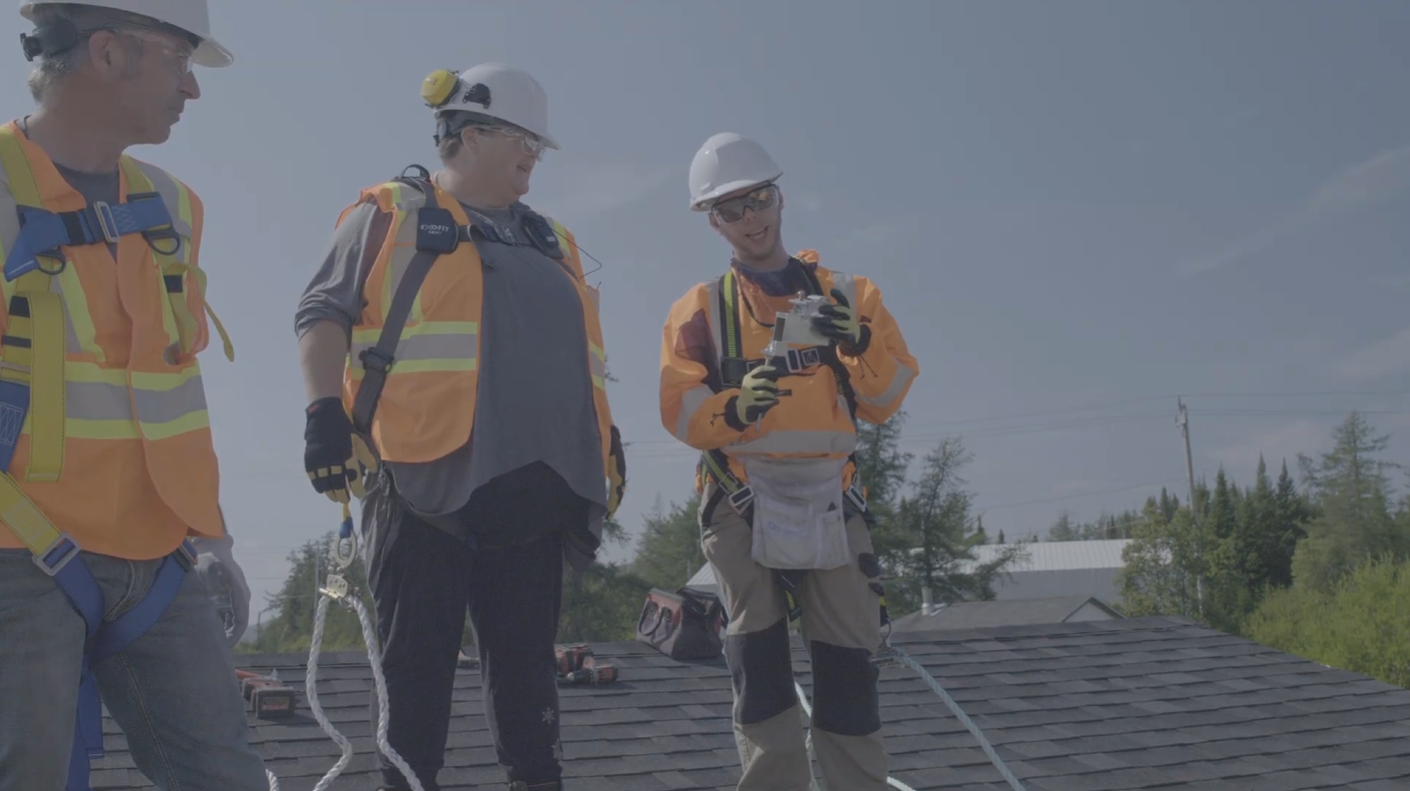
Eric notes that while the project helped younger participants explore career paths, “for the older crowd, they were able to be a part of something that benefited their community and showcased their skills. A lot of them expressed interest in solar, some of them even already have small systems on their cabins.”
As solar installers, Tony and Eric have had the opportunity to work in remote communities across the country, including on another Iron & Earth project in Nunatsiavut, Labrador. Earlier in 2025, their teammate even assisted on an installation in Gjoa Haven, a small community north of the Arctic Circle, where temperatures were -37 °C. “Not the most pleasant environment to work with for sure, But you know, it's going to help a lot of the locals with their utility bills,” Tony says.
However, “we never – at least I personally – have been able to engage with the community like we did here in Cartwright,” Eric says. It was clear to the Green Sun Rising team that this was not just an installation, but a real point of community pride.
“It seemed to me that this solar project was a bit of a big deal for the community,” Tony says. “Everybody knew about it, everyone was talking about it. They were all really excited about it. That opportunity to develop some new skills, utilize them, work well together, achieve that system, complete it, and now they know how to maintain it. They're going to want to take care of it because they were a part of it. They're going to spread the message of what it means.”
Cartwright’s strong community comes up in a lot of Iron & Earth’s coverage of this project because it is so immediately striking to those who visit the town. As Eric says, Cartwright proves that “that sort of textbook definition of ‘community’ actually exists… Everybody knows each other. Everyone's really kind and hospitable, and they're just like one big family. It makes me want to be more involved in my own community here and you know, see what's out there and try and replicate that.”
While Tony and Eric are used to being hosted by the communities where they work, Cartwright really welcomed them at every opportunity.
“I know it sounds kind of funny, but food's a very social thing and everyone was bringing different stuff and you wanted to share it,” Tony says. “They made us so many different meals, but a lot of traditional meals. That was a cool and unique experience as well. They were just thoroughly into sharing their culture and their stories. They brought us to a drum circle. It was just awesome to see them, so proud of their culture, their heritage.”
The drum circle was led by members of the Sandwich Bay 50+ Club who survived the residential school system. “As much as many of us have learned and read about these kinds of things, when you come face-to-face with some of those people and hear their stories, it was a very powerful experience,” Eric says.
For Tony and Eric, the trip to Cartwright was more than just another job; it started friendships the team continues to maintain online, and both hope to visit the community again in the future.
“I just want to give props as well to Iron & Earth, of course, and to all the sponsors, NCC, the Sandwich Bay 50+ Club that operates within the Marion Center,” Tony says. “It was just sort of nice to have a collaborative approach and effort all together to get the system done. There's an expression: ‘it takes like a village to raise a child.’ You know, it takes like a village of companies and a collaborative team effort to put up a solar system.”
Photos by Cody Southgate. Copyright Iron & Earth 2025.